

Carding
In the carding process, high levels of static charges are generated and could damage or weaken the yarns. Therefore, these electrostatic charges must be neautralised, prior to the next manufacturing stage.
Our solution, is to install a pulsed DC static elimination bar such as our 960 (for mid-range) and 971IPS (for long-range) at the required distance and appropriate position to achieve static neutralisation. Any metal work between the ionising bar and the target area will prevent the ionising effect from neutralising the problem.
For instance, the recommended positioning for the Meech 976 bar is shown below. The distance between the combs and the belt should be the same, giving an approximate distance of 250mm from the comb / belt nip point.
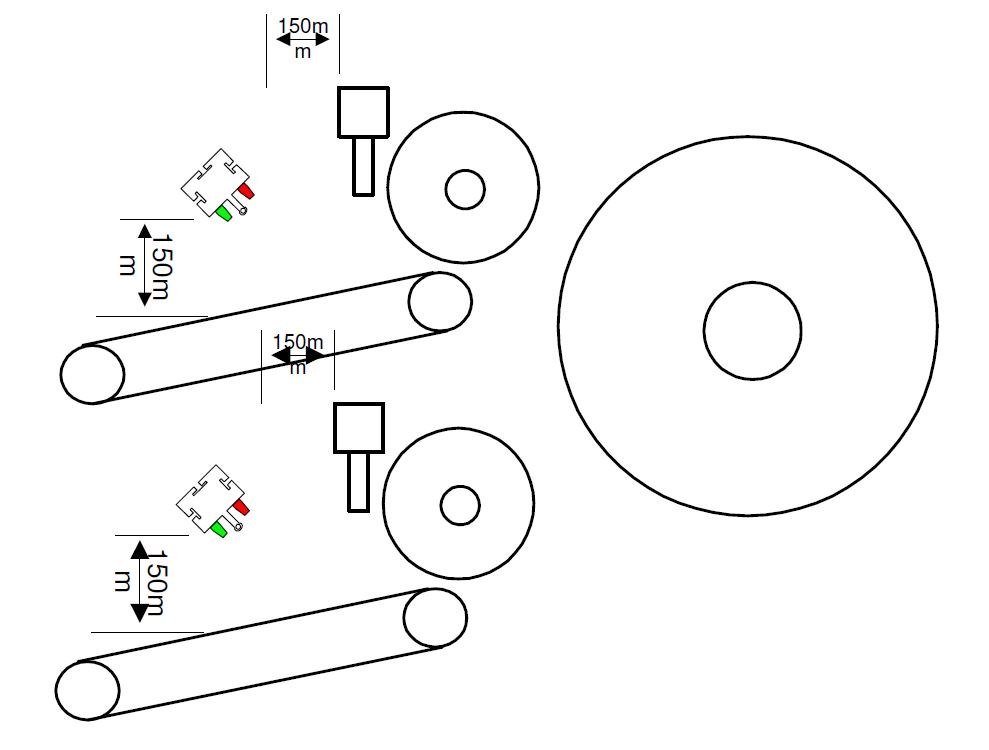
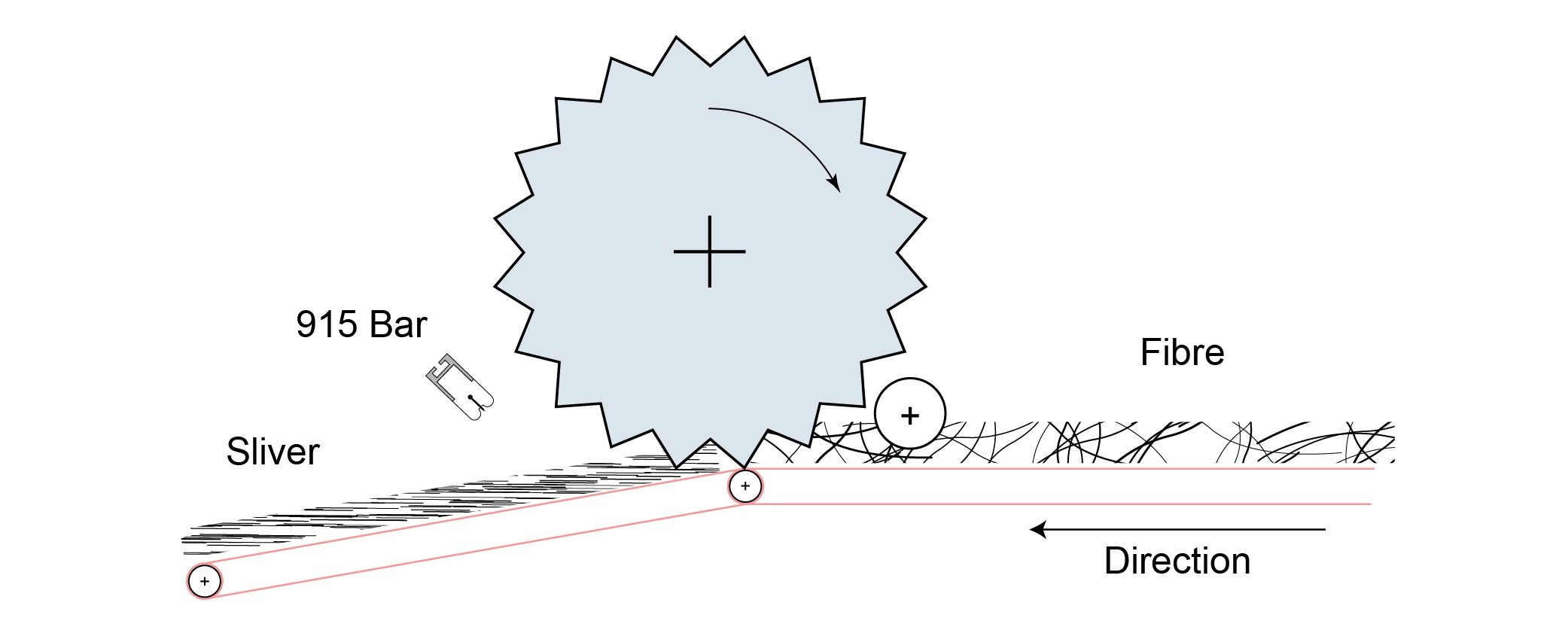
Fibres Clinging To Combs On Textile Carding Machines
Fibre material is combed off a Doffer cylinder, either by an oscillating comb or by a rotary brush. High static charges are generated on the fibres. Static causes the fibres to cling onto the delivery transfer conveyor, resulting in a poor transfer of the product to the next process.
Our solution, is to mount a 915 ionising bar 200mm away from the comb neutralises the high static charges on the product and prevents the material from clinging onto the machine feed chutes or conveyor. The overall presentation of the finished product is also improved.
Warping & Beaming
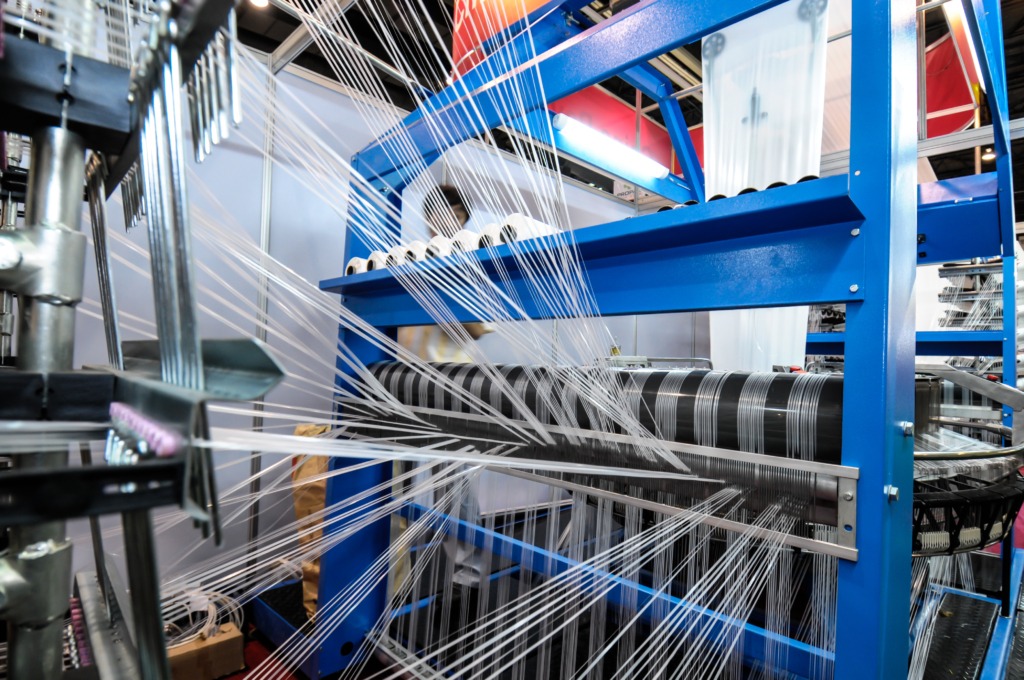
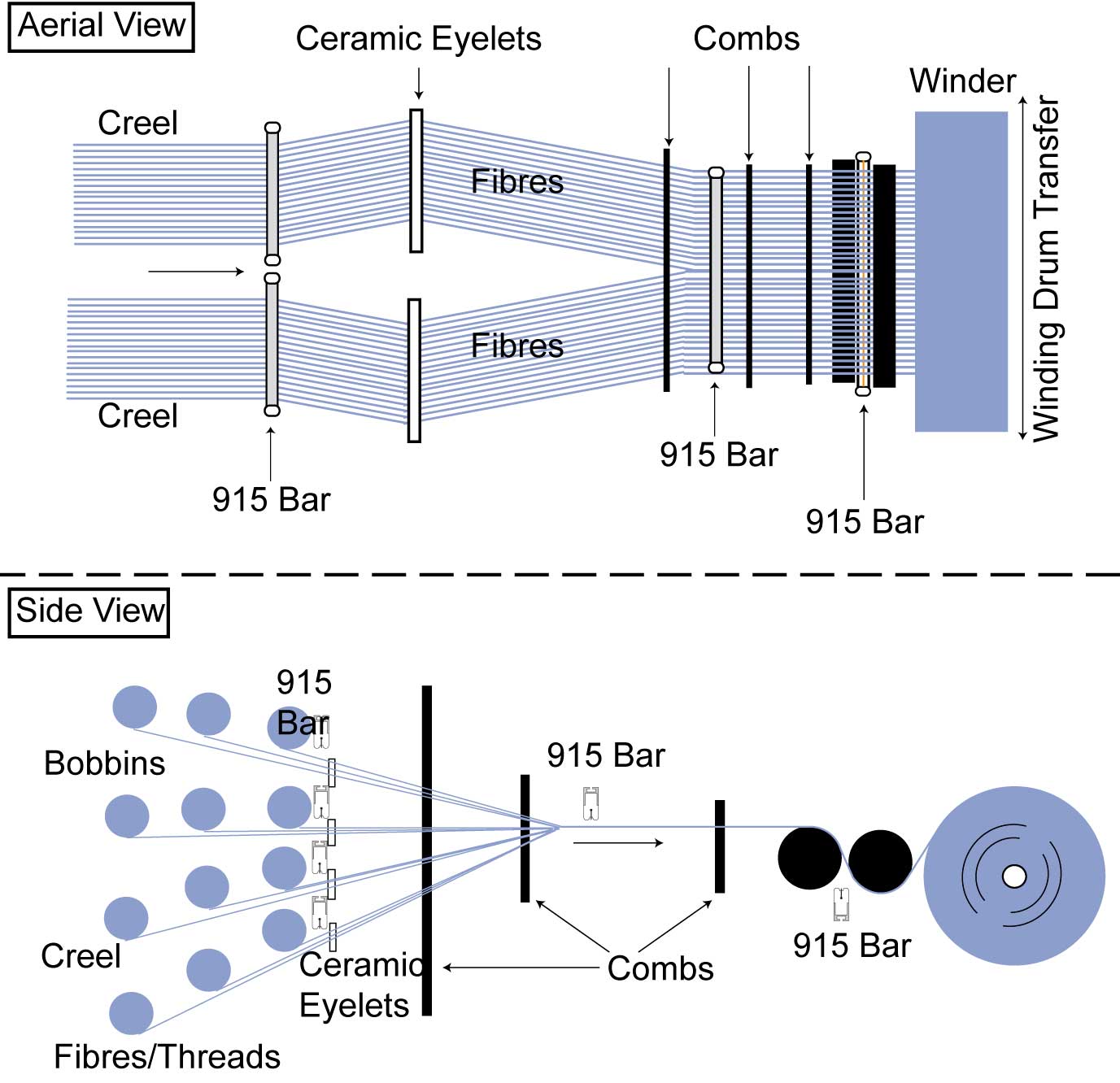
During warping and beaming, static charges are generated on the fibres as they pass through the ceramic eyelets and the combs. The static charges generated on the individual fibres cause the fibres to either attract or repel. This fibre movement causes problems when the fibres pass through the eyelets and combs resulting in fibre breaks. It will also cause a poor presentation of the fibres onto the warping beam. These problems result in costly machine down time and product waste.
This issue can be resolved by installing our Model 915 shockless antistatic bar just prior to the problem areas. The ionised air flow eliminates the fibre movement, resulting in increased production output, quality and a reduction in waste.
Feeding from Creels
Yarn exiting the creels are heavily electrostatically charged due to friction in the ceramic eyelets. If the yarns aren’t neutralized, this could lead to yarns being repelled (a process known as ‘ballooning’ due to the shape it produces around the tip of supply bobbin) between the creel and the warper.
This issue can be resolved by installing multiple antistatic bars (short-range) in a row to cover multiple layers of yarn, or by using a long-range DC Ionising bar to neautralize static charges on on each layer of yarn coming from the creel.
Stentering Operations
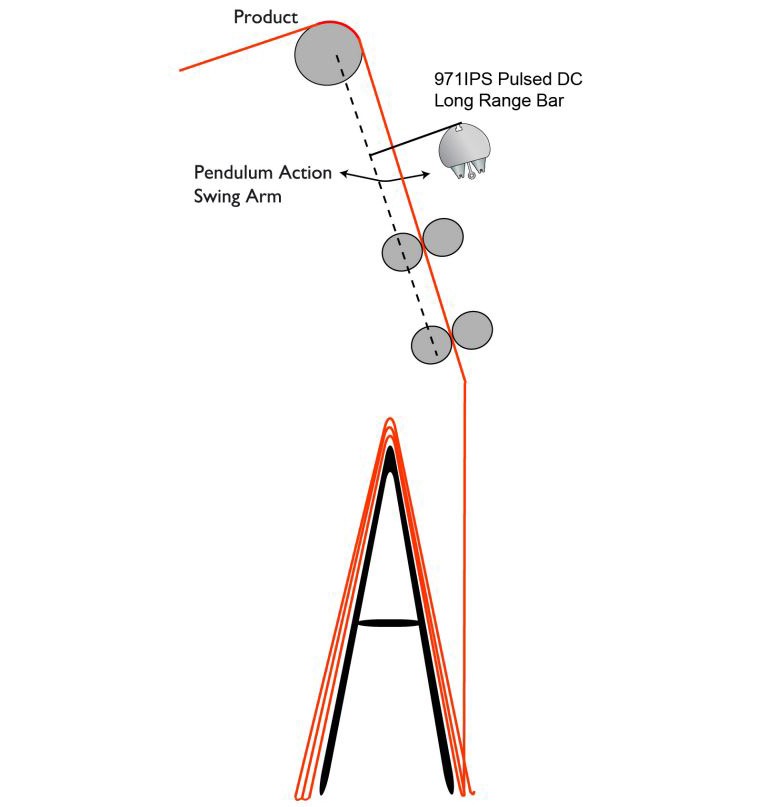
During the stentering process, textiles are delivered directly onto a frame via a swing arm.
The following problems can arise:
- Static causes the product to cling or attract onto the frame sides
- Contamination of product due to dust attraction
- Operator shocks
Mounting a 971IPS on a bracket, allowing the bar to stand 200mm off the product path, behind the nip rollers on the swing arm ensures that the product is fed onto the frame free of static. The pendulum action sends waves of ions down on to the product allowing filling to be controlled with the same method.
The Model 971IPS bar also ensures the product is contaminant-free and the risk of shocks to the operator is removed.
Winding & Unwinding
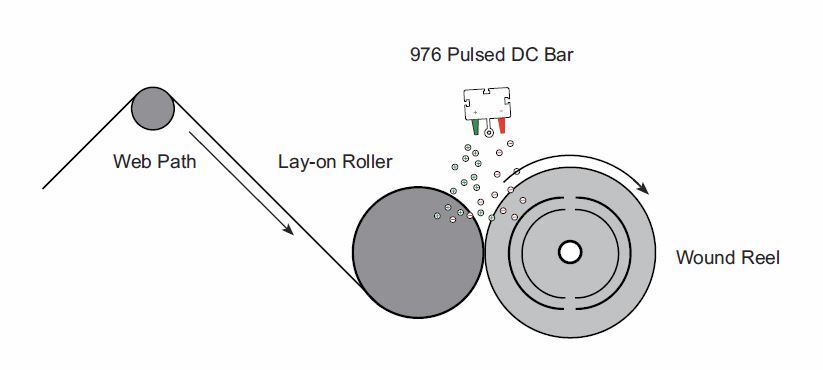
During winding and unwinding, high levels of static charge is produced as a result of the contact and separation processes.
To overcome static issues, an effective static control solution such as installing a long-range static elimination bar (such as our 971IPS) or the appropriate web cleaner (such as our VacClean, CyClean or CyClean-R) should be introduced. This will neutralise any static charges caused during these processes process.
Feeding Sheet Folder Dropping Sheets Due To Static Attraction
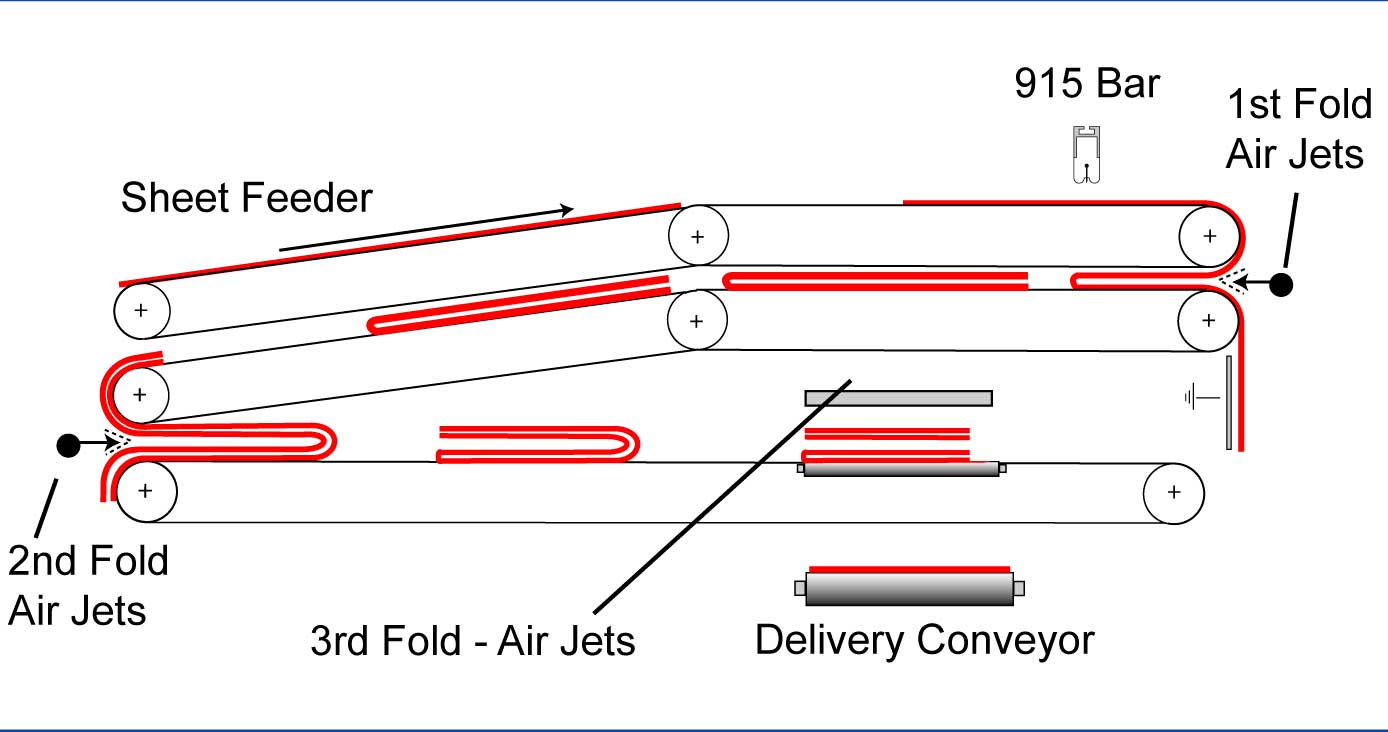
Laundry folding machines handle items such as sheets, towels and table cloths. Such items are now normally in man-made fibres and high static charges are generated during transfer through the narrow conveyor systems and folding stations. The static charges cause the items to cling to the conveyor belts. As a result, they miss the folding unit and are then either automatically ejected from the machine or wrap around the rollers. Substituting the standard canvas conveyor belts with conductive belts does not resolve the problem.
Our solution, is to install our shockless 915 ionising bar prior to first folding station, as shown in the diagram. It is important that the top conveyor belts should be canvas rather than conductive. Not only is this a cheaper option but also performance is improved. The lower belts can be either canvas or conductive belts.