

Following The Battery Show North America, Meech argues that manufacturing yield, not production capacity alone, will determine who leads the global battery industry.
The global battery race is often framed around gigafactories, investment and production capacity, with billions being invested worldwide to support electrification. However, building capacity is only part of the challenge.
Even the most advanced battery technology has limited value if it cannot be manufactured consistently and profitably at scale. As manufacturers transition from pilot production to gigafactory operations, attention is increasingly shifting to manufacturing yield.
Research from Fraunhofer FFB and RWTH Aachen University found that battery cell manufacturers commonly experience scrap rates of 15-30% during the first years of production, while losses of around 10% can persist even after five years. While many Western producers remain focused on reducing scrap during ramp-up, China’s battery leaders are increasingly concentrating on improving yields in mature processes.
For Matt Fyffe, VP & General Manager of Meech USA, this is where the competitive battle will be won.
“Billions of dollars are being invested in battery production capacity on both sides of the Pacific, but the global battery race will not necessarily be won by those who build the most factories,” he said. “America’s new production facilities must prioritise quality and manufacturing excellence, ensuring this is a race to the top, not simply a race to build more capacity.”
Looking Beyond Factory Capacity
Battery manufacturing is a highly complex process involving multiple stages, from initial base foil production, coating, calendaring, slitting/laser cutting, – right through to cell winding/stacking and final handling. At each step, manufacturers face a common challenge: contamination.
Inherited contamination from rolls, electrostatic attraction of airborne particles, and process generated contaminants can all contribute to product defects. In high-volume battery manufacturing environments, even small contamination issues can lead to scrap, rework, downtime and reduced productivity. While cleanrooms play an important role in battery manufacturing, contamination control extends far beyond the facility itself.
“Many battery manufacturers still think about contamination in terms of cleanrooms, but this is a huge oversimplification,” says Fyffe. “Contaminants find their way into processing lines at many different stages, from material handling and slitting through to cell assembly and final packaging. Early identification of risks and implementation of appropriate mitigation can have a measurable impact on yield, productivity and long-term profitability.”
As production volumes increase, the cumulative impact of contamination-related defects can become substantial. For manufacturers operating at gigafactory scale, improvements in yield can translate directly into higher output, lower costs and improved profitability without requiring additional production capacity.
Preventing Problems Before They Become Defects
Just as battery manufacturers increasingly focus on quality throughout the production process, contamination control is most effective when approached proactively rather than reactively.
Working extensively with battery manufacturers, machinery OEMs and research organisations worldwide, Meech has identified areas where contamination and unwanted static charges routinely contribute to manufacturing losses. The company’s experience shows that addressing contamination close to its source can significantly reduce the likelihood of defects being carried forward into later production stages.
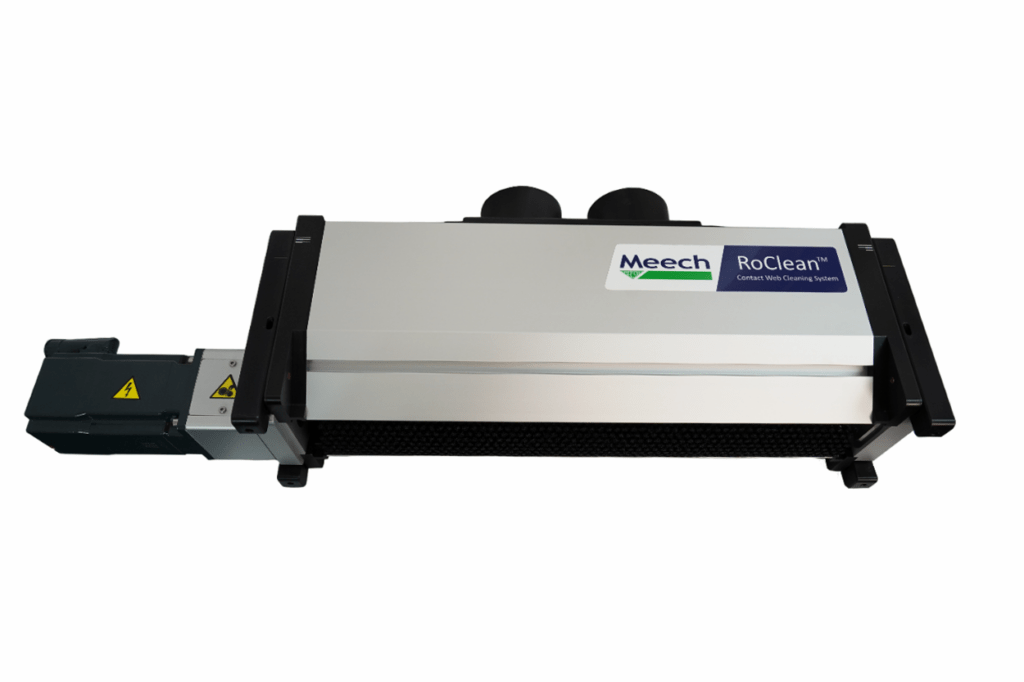
By integrating web cleaning and static control technologies tactically at key stages in the manufacturing process, producers can remove contaminants and neutralise static charges before they affect product quality. This preventative approach aligns with the growing industry focus on “zero faults forward” manufacturing strategies, where defects are prevented rather than detected after they occur.
Yield as a Competitive Advantage
As battery technologies continue to evolve, innovation will remain critical. However, long-term competitiveness will be determined not only by what manufacturers can design, but also by what they can reliably produce.
Across multiple industries, manufacturing leaders have demonstrated that operational excellence and production consistency can create significant competitive advantages. The battery sector is unlikely to be any different.
“China’s advantage is not simply production capacity,” concludes Fyffe. “It is the ability to manufacture consistently at scale. In the future global battery race, yield is going to be every bit as important as innovation. Competitiveness is determined not by elegant design, but by what you can reliably produce.”
Learn how proactive contamination control can improve battery manufacturing performance, productivity and profitability. Download Meech’s Battery Manufacturing Guide to learn more.