
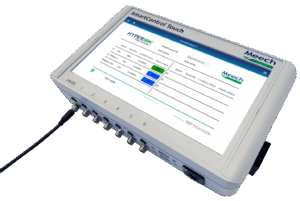
Static control monitoring has become increasingly important as manufacturers look for greater visibility of their equipment and processes. Today, SmartControl™ helps users monitor and manage connected Meech products from a single location, providing valuable insight into system performance and status. However, the platform that customers know today is very different from the original concept.
This is the story of how customer feedback helped shape SmartControl™ into the solution it has become.
The Problem
Production lines often feature multiple Meech ionising bars tucked away in hard-to-reach locations. Checking whether a bar was operating correctly, needed cleaning or was delivering the right level of ionisation often meant physically inspecting each unit one by one. As a result, this process was time-consuming and took valuable time away from production. It was also not always practical, particularly on large or complex production lines.
The question was simple: how could operators monitor multiple static control devices from a single location?
The First Solution… That Wasn’t Quite Right
The original SmartControl™ concept seemed straightforward. It was designed to sit inside a machine’s control cabinet, allowing users to access information remotely through their existing systems. At first, it solved the problem.
The catch? The design had been largely shaped by feedback from a small number of early customers. This meant we were only seeing a narrow view of the challenges they faced. However, as development progressed and discussions expanded to a wider group of customers and beta test sites, a different picture began to emerge.
Initially, the feedback suggested that customers wanted greater network connectivity. However, it became clear that what they actually wanted was to be able to see what’s happening immediately.
In other words, customers wanted an integrated display.
Back to the Drawing Board
This feedback forced our Engineering team to rethink the direction of the product. What started as a hidden device inside a control cabinet evolved into something far more intuitive, visible and user-friendly.
As a result, an integrated screen became central to the design, giving operators instant visibility of connected products without requiring additional hardware or network setup.
It was a valuable reminder that solving a problem for one customer does not necessarily solve it for everyone. To deliver a successful product, it must be versatile enough to suit a wider range of users and environments.
The Technical Challenge Nobody Saw Coming
However, the hardware wasn’t the only obstacle. Historically, our products were built to communicate with our BarMaster Remote Programmer. They were never designed to be monitored and controlled by a centralised platform.
Building that capability required significant software development. What started as a product project ended up laying the groundwork for a more modern approach to product development across the entire business.
New Challenges Created New Opportunities
As SmartControl™ continued to evolve, the goalposts shifted again. The system needed to communicate with a variety of PLC platforms and customers were also asking for additional features.
Every new request added complexity but also multiplied the product’s value, turning it into a flexible solution capable of supporting a much wider range of applications and industries.
The Lesson Learned
The biggest takeaway wasn’t technical at all. SmartControl™ was developed before we had a dedicated Product Management team, meaning there was less opportunity to fully explore customer needs before development began.
The experience highlighted the importance of understanding customer requirements from the outset. Today, product development begins with a specification process led by our Product Managers. This includes speaking with multiple customers to gather a broader understanding of their challenges and expectations before any design work starts.
By doing so, we can build a more complete picture from the beginning and ensure new products are developed on a stronger, more structured foundation.
What Made It Successful?
Ironically, SmartControl™ succeeded because the team didn’t assume they had all the answers.
Customer feedback continuously shaped the product. Early assumptions were challenged, designs were revisited, and new features were added as real-world requirements emerged.
SmartControl™ now provides customers with a powerful way to monitor and manage connected products, whilst all new electronic product developments are designed with SmartControl™ compatibility in mind from the outset.
As a result, the platform has evolved significantly since its original concept.
The Contaminated Conclusion
Most case studies focus exclusively on the polished finished product. SmartControl™ is different.
Its success wasn’t built on getting everything right the first time. It was built on listening, adapting and changing course when the original idea missed the mark.
The journey from concept to the Hyperion™ SmartControl™ platform available today reflects the values that form the foundation of Meech: Reliable, Innovative and Collaborative.
By working closely with customers, embracing feedback and continually improving, we were able to create a stronger solution that delivers real value to manufacturers around the world.